
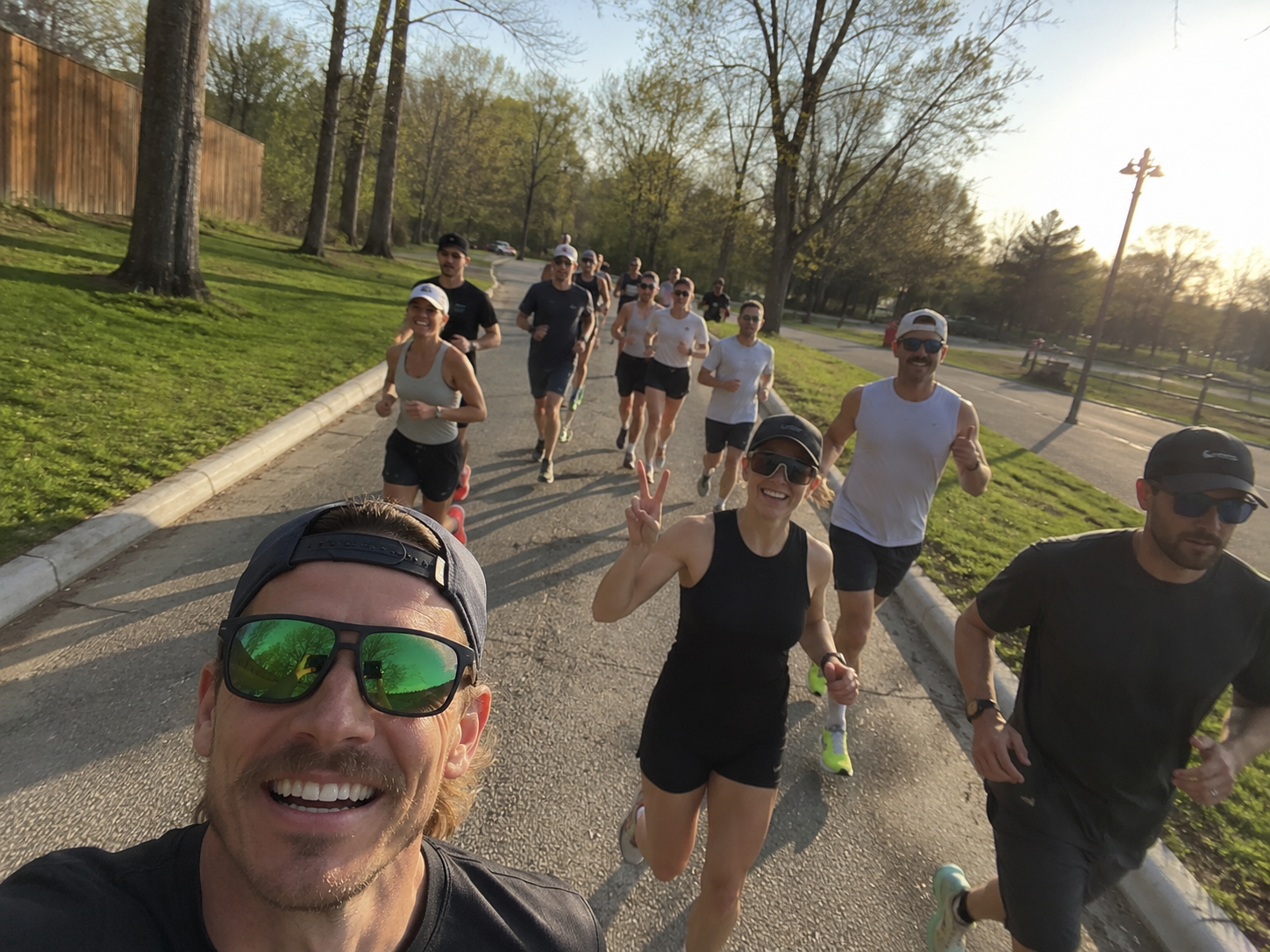
The AJ Bell Great North Run returns on Sunday 13 September 2026, sending around 60,000 runners from Newcastle upon Tyne over the Tyne Bridge and out to the coast at South Shields. It is the world's biggest half marathon, 13.1 miles (21.0975km) of closed roads, brass bands and Geordie crowds who will scream you up every hill. If 2026 is your first one, here is the honest version: the date, the route, how to still get a place, how to train, and what actually happens on the morning.
When is the Great North Run 2026?
The Great North Run 2026 takes place on Sunday 13 September 2026. It is a half marathon, so 13.1 miles or 21.0975km, run on closed roads from Newcastle to South Shields. The race has been held every September since 1981, and 2026 marks its 45th edition.
You will be given a wave start time after entry, staggered through the morning so 60,000 people are not all funnelling over the Tyne Bridge at once. Elite and wheelchair races go off first, then mass-start waves follow. Expect to be on your feet from early morning: with travel, bag drop and a long walk to the start pens, most runners are up not long after dawn even if their wave does not set off until later. Plan your day around your wave, not the headline start time. Full timings are published by the organiser, Great Run, closer to race week.
Great North Run 2026 key facts
Here is everything a first-timer needs in one place. The course record, the Tyne Bridge and the famous Red Arrows flypast are all part of the day, but these are the details that affect your planning.
DetailGreat North Run 2026 DateSunday 13 September 2026 DistanceHalf marathon, 13.1 miles / 21.0975km StartCentral Motorway, Newcastle upon Tyne FinishThe seafront at South Shields ParticipantsAround 60,000 Entry routesPublic ballot (closed for 2026) or a charity place Statutory entry feeApproximately £68 The route is famously net downhill to the sea, but it is not flat. The climb out of the Tyne valley in the first few miles catches people out, so do not bank on the "downhill" reputation alone.
How do I enter the Great North Run 2026?
There are two main ways in: the public ballot or a charity place. The 2026 ballot has already closed (it ran in early January, with the draw on 12 January), so if you missed it, a charity place is your route to the start line.
Charity places work simply. A charity buys places from the organiser and gives them to runners who commit to raising a minimum amount, often somewhere between £300 and £600. You usually sign up directly on the charity's site with little fuss, and your entry fee is folded into the deal. Big names like the British Heart Foundation, Macmillan and Teenage Cancer Trust all take Great North Run runners.
Move quickly. Charity places typically close in early July 2026 and the most popular charities fill long before that. For the official entry routes and next year's ballot dates, check NewcastleGateshead's entry guide.
How should I train for the Great North Run?
If you can already run a 5K, you have roughly 12 weeks from June to be ready for September, which is plenty. The principle is boring and it works: one longer run each week that creeps up by no more than a mile or so at a time, two or three easier runs, and at least one full rest day. Most first-timers peak at a long run of 10 to 11 miles two or three weeks out, then taper.
Do not race your training runs. The classic mistake is running everything at the same gasping effort, which leaves you tired and injured. Keep easy days genuinely easy. If you are stepping up from shorter distances, our guide on running your first half marathon after a 5K walks through the full build. Already comfortable at 10K? The structure in our 10K training plan scales up neatly. Training with a few others makes the long runs fly by, so it is worth finding a local run club for the Sunday miles.
What is a good Great North Run finish time?
For a first half marathon, finishing is the win, and most first-timers come home somewhere between 2:00 and 2:45. The Great North Run is busy and undulating, so it is not the course for a personal best on debut. Set a pace you can hold to South Shields, not one you can hold to Gateshead.
Use a recent race to set an honest target rather than guessing. Pop a recent 5K or 10K into our race time predictor and it will estimate a realistic half marathon time, then convert that into the pace you need to hold with the pace calculator. For context on where you will land nationally, our breakdown of the average half marathon time in the UK shows what is normal by age and ability.
Finish timePace per milePace per kmRoughly who 1:458:004:59Experienced, trained 2:009:095:41Solid regular runner 2:1510:186:24Comfortable first-timer 2:3011:277:07Run-walk or steady debut 2:4512:357:49Taking it all in, no rush Race-day tips for first-timers
Get to the start area early and use the bag drop before the queues build, because moving 60,000 people takes time. Wear what you have already run in. Nothing new on race day, from socks to gels, or you will learn an expensive lesson around mile nine.
Start slower than feels right. The opening miles climb away from the river and the adrenaline plus the crowd will tempt you to sprint the Tyne Bridge. Hold back, settle into your goal pace, and you will be overtaking people in the back half while they fade. Take water at the stations, accept the jelly babies the locals hand out, and look up for the Red Arrows. The long downhill into South Shields is your reward, so save a little for the seafront finish. Soak up the crowds. The Geordie support is the best in British running and it carries you the whole way.
Getting there and travel
The Great North Run is a point-to-point race, so the golden rule is to plan your return from South Shields, not your arrival in Newcastle. The Tyne and Wear Metro is the sensible choice: it serves both the Newcastle start and South Shields, and runs extra services on the day, though it gets extremely busy after the finish. Build in patience.
If you are travelling from out of town, Newcastle Central station is well connected and walkable to the start. Book accommodation early, as the city fills up for race weekend and prices climb. Do not drive to the finish expecting an easy exit, because road closures around both ends are extensive. Many runners stay in Newcastle, Metro to the start, then Metro back from South Shields once the post-race crush eases. Pack a warm layer in your bag drop for the wait at the windy seafront afterwards.
Frequently asked questions
When is the Great North Run 2026?
The Great North Run 2026 is on Sunday 13 September 2026. It is a half marathon of 13.1 miles (21.0975km) run on closed roads from Newcastle upon Tyne to South Shields, with staggered wave starts through the morning for around 60,000 participants.
How do I enter the Great North Run if the ballot is closed?
The 2026 public ballot has closed, so a charity place is your way in. Sign up directly with a charity, commit to a fundraising target (often £300 to £600), and they cover your entry. Apply soon, as most charity places fill before July.
Is the Great North Run hard for beginners?
It is achievable for most people who train for around 12 weeks from a 5K base. It is a half marathon, so it demands respect, and the early climb out of Newcastle is tougher than the "downhill to the sea" tag suggests. Train your long runs and you will finish.
How long does it take to run the Great North Run?
Most first-timers finish between 2:00 and 2:45. Elite runners go under an hour, but the course is busy and undulating, so it is not built for a debut personal best. Set a steady, sustainable pace rather than chasing a number on your first attempt.
What is the route of the Great North Run?
The course starts on Newcastle's Central Motorway, crosses the Tyne Bridge into Gateshead, runs along the A184 and A183, then finishes on the seafront at South Shields. It is net downhill overall but includes a notable climb in the opening miles.