
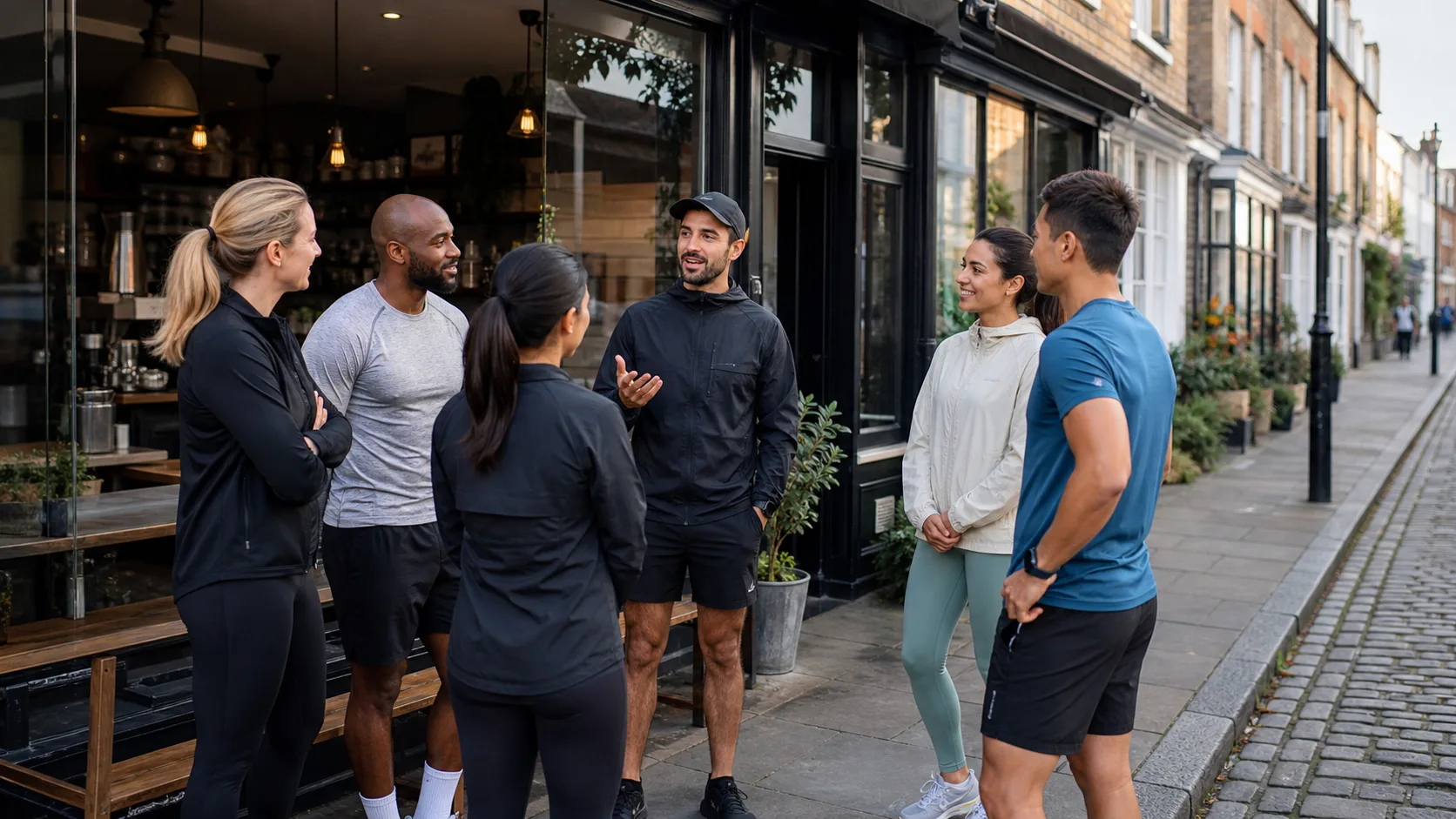
A cafe can start a run club by finding a competent run leader, choosing one repeatable route, setting a realistic attendance limit and testing the same weekly session for at least four weeks. The cafe can provide the home base, but the running activity still needs a named person responsible for the route, briefing and participants.
Keep the first version small. One distance, one meeting point and one post-run arrangement are easier to run well than a launch event with several pace groups and an uncertain finish.
Should the cafe lead the run or find a partner?
A cafe does not need to become a running organisation. It can partner with an existing local club or recruit a suitable run leader who understands the group. That usually creates clearer responsibilities: the leader manages the run, while the cafe manages its premises and service.
Search the RunClub directory for groups already active nearby. Speak to a club whose schedule and culture fit the venue. A beginner-friendly social group may suit a relaxed weekend coffee session, while a faster training group may want an earlier start and quicker service afterwards.
England Athletics explains that RunTogether groups can offer different paces and beginner routes, and provides a route for people who want to train as group leaders. Its run leader guidance is a sensible starting point when defining the role.
How do you choose the route and meeting point?
Choose a route that matches the group's advertised ability and returns to the cafe without requiring runners to cross a busy entrance as one large pack. Walk or run it at the planned time. Check lighting, road crossings, narrow paths, toilets and places where the group could become separated.
The assembly point should be obvious to newcomers but outside the main customer flow. Tell members exactly where to wait and when they may enter. Use RunClub's route creator to plan the loop, then share the route before the first session.
If you need a fuller setup checklist, read how to start a run club.
What should the first session look like?
| Stage | Simple first-session plan |
|---|---|
| Before | Collect RSVPs, publish pace and distance, check weather and brief cafe staff |
| Arrival | Check runners in outside, introduce the leader and explain the route |
| Run | Use a no-drop approach or clear regroup points appropriate to the group |
| Finish | Move runners away from the entrance and explain the cafe arrangement |
| Review | Record attendance, incidents, service issues and member feedback |
Do not make the first run a large public spectacle. A controlled soft launch lets the leader test the route and lets staff see how the arrival affects the counter and seating.
How should the cafe handle bags, toilets and water?
State the arrangement before people arrive. If there is no secure bag storage, say so. If toilets are only available to customers or after opening time, make that clear. Agree where bottles can be refilled without blocking service.
The venue should never accept responsibility for personal belongings casually. Either provide a defined, managed process or ask runners to carry what they bring. Our run club venue checklist covers the facilities in more detail.
Does the cafe need a launch discount?
No. Start by proving the operation works. The cafe can add a controlled offer after it knows what members order and how the group affects trade. A fixed runner bundle, a free size upgrade or a later-visit reward may protect margin better than a blanket discount.
If an offer is added, publish its time, eligible products, redemption method and limit. RunClub's runner deals show how a venue benefit can sit alongside verified participation.
How do you know whether the cafe run club is working?
Review four things after each session: verified attendance, runner transactions, operational impact and repeat attendance. The club can feel busy while creating little value, or look modest while building a reliable group of returning customers.
Compare the same time window before and during the pilot. Ask staff one focused question: "What should we change next week?" Ask members whether the pace, route, arrival and post-run setup were clear. Keep the session stable long enough for the result to mean something.
How often should a cafe run club meet?
Once a week is enough to establish a habit without overloading a new team. Use the same day and time for the first month before adding sessions.
Can a cafe start a run club without showers?
Yes. Most social cafe runs do not require showers. Runners do need accurate information about toilets, changing space, bag storage and the post-run seating arrangement.
How many pace groups should the first run have?
Begin with one clearly advertised pace or a short route with planned regroup points. Add pace groups only when there are enough suitable leaders to manage them safely.
How can a cafe list its runner offer?
Once the pilot works, the venue can apply through RunClub for venues and create an offer runners can discover. Keep the published deal exactly aligned with what staff have been trained to provide.