
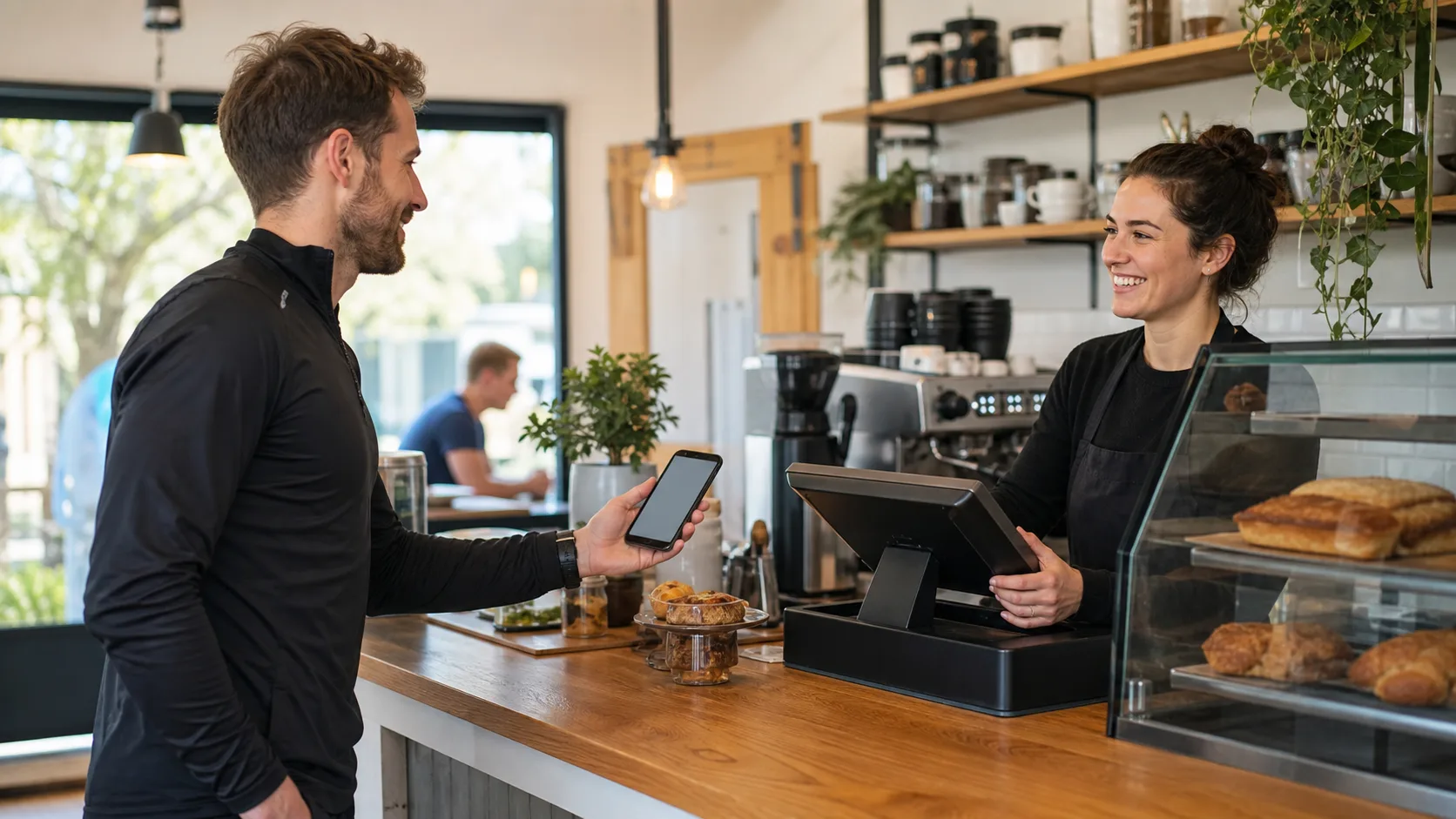
A runner discount should have one eligibility rule, one easy verification method and terms that fit on a small staff instruction card. The venue should know what behaviour it wants to encourage, what each redemption costs and when the offer is valid.
The simplest useful structure is: verified participant, selected item, defined time window, one use per event. More complicated offers need to earn their complexity.
What are the essential parts of a runner discount?
| Part | Question to answer |
|---|---|
| Eligibility | Which club members or event attendees qualify? |
| Verification | What does the runner show at the till? |
| Benefit | Which item or basket receives which benefit? |
| Timing | On which days and during which hours is it valid? |
| Limit | How many times can one person redeem it? |
| Exclusions | Which products, locations or other offers are excluded? |
| Expiry | When does the offer end or require review? |
Put these terms wherever the offer is advertised, then give staff a shorter operational version. The customer wording and till wording must describe the same deal.
How should eligibility be verified?
Use a method tied to real participation, such as a current event check-in or member deal in the app. Avoid a reusable public code if the offer is intended only for active members. Screenshots also become difficult to control if there is no date or changing status.
RunClub connects attendance and local benefits. Runners can review available deals, while organisers can learn how verified check-ins support a stronger club.
The process should take seconds. Staff need a recognisable screen and a clear till button, not a judgement call about whether someone looks like a runner.
Should the discount apply immediately or later?
An immediate offer is useful for driving post-run orders. A later-use reward is better if the venue wants members to return on another day. The right choice depends on capacity and the commercial goal.
A busy Saturday cafe may gain little from discounting orders it would have received anyway. It might instead offer a weekday benefit to verified Saturday runners. A quiet early-evening pub may prefer an immediate food bundle after a club run.
Use the guidance on choosing run club rewards to compare structures before setting the percentage.
How do you set a sustainable discount?
Calculate the contribution from the eligible item after product cost and direct fulfilment costs. Then model a realistic number of redemptions. The discount should still make sense if every eligible runner uses it.
Do not rely on an assumed add-on purchase to rescue an offer that loses too much on its own. If additional spend is part of the business case, measure it during a pilot. A fixed bundle often provides more control because the venue chooses the included products and selling price.
What must the advert tell runners?
Tell runners the significant conditions before they decide to participate or travel. That normally includes eligibility, product scope, dates, times, limits and important exclusions. Avoid a prominent headline that is contradicted by small print.
The UK's ASA promotional marketing guidance covers discounts, loyalty schemes and co-promotions. It notes that the rules can apply where more than one party benefits, which is relevant when a club and venue promote the same offer.
How should staff be briefed?
Give every relevant shift a one-page instruction containing a picture or description of valid verification, the till action, eligible items, time window, limit and escalation contact. Test the process with a staff member who was not involved in designing it.
Record failed redemption reasons. If several runners encounter the same problem, fix the process before spending more effort promoting it. Venues considering a partnership can start at RunClub for venues.
How do you prevent discount misuse?
Use current, event-linked verification and a per-person limit. Avoid codes that can be copied into public forums. Train staff to decline an invalid redemption politely and give them one escalation contact for genuine technical problems.
Controls should remain proportionate to the value. A complicated identity check for a small drink upgrade wastes staff time and frustrates legitimate runners. Start with the lightest process that keeps the offer within the intended group, then review unusual redemption patterns rather than treating every member as a risk.
Can a runner discount be combined with another offer?
It can, but the rule must be explicit. If offers cannot be combined, say so before checkout. If they can, test the margin effect rather than leaving staff to decide.
Should every member receive the same discount?
Usually, yes. Simple and fair eligibility is easiest to understand. Attendance milestones can support a different reward, but the progression and limits should be transparent.
How long should a discount pilot run?
Four comparable club sessions provide a practical first test. Review redemptions, runner spend, staff feedback and repeat visits before renewing or changing it.
How does a club plan a route around a partner venue?
Use the RunClub route creator to make the venue a safe start or finish point. Check the route at the actual event time and keep the group clear of entrances and customer queues.